Driver app guides through mobile workflows in all languages

From “Merhaba!” to “Dzień dobry!” to “Hello!”: in logistics, many languages are spoken. In itself, that’s a wonderful thing – but it becomes difficult when communication in a transport company fails due to language barriers. The solution: mobile workflow apps that master language challenges (and many other tasks) with ease. Read on to find out exactly how this works, why everyone can speak in their native language, and which processes are even fully automated.
Live status instead of question marks: always app to date
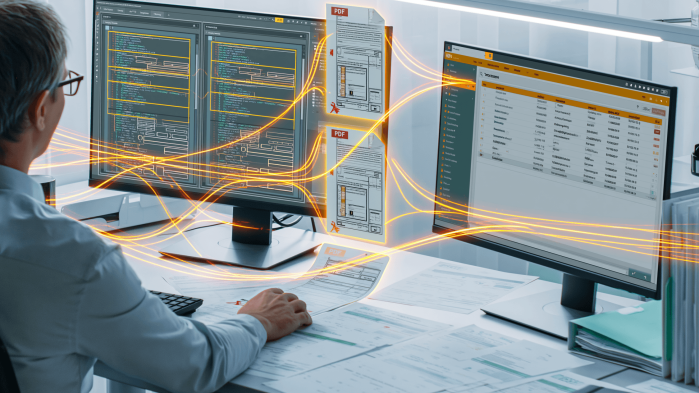
“Information is key!” – that's one of the mottos in logistics. When everyone involved is informed about the status of a shipment, it saves a lot of questions and problems. A good logistics app communicates the live status of the transport process, ensuring transparency. Using a live map that shows the current location of all active vehicles, dispatchers can track day-to-day business in real time. For example, they can see that everything is running smoothly on tour one: two parcels have already been unloaded, the scheduled delivery will be completed on time, and the last-minute pick-up at the company around the corner still fits into the schedule. The driver on tour two, on the other hand, is stuck in traffic and does not have time to accommodate extra orders. The customer also benefits from the real-time status: instead of calling the carrier to ask whether the urgent shipment will arrive on time, they can see exactly how many stops the driver still has to make before delivering.
What’s on the agenda today? Organised planning with logistics apps
Digitising mobile processes is at the top of the to-do list for many companies. Here's a note with a last-minute order, there's a quick phone call: “Can you please load three additional pallets from the pet food supplier, they were added at the last minute?” If there is no structure in communication, things quickly become chaotic and mistakes are inevitable.
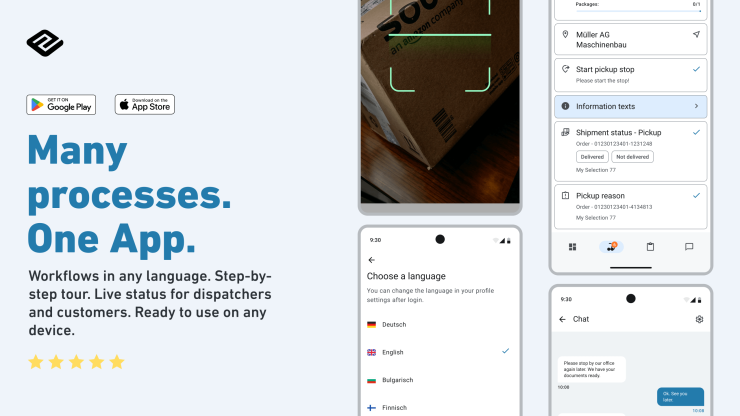
If, on the other hand, the route is available digitally in the app, dispatchers can make last-minute changes to workflows at any time. Drivers don't have to worry about a thing; they can always see the next stop on their route, including a checklist of all the tasks they need to complete. Is there a specific route to take? Does the customer have special delivery windows? Do certain forms need to be signed? The workflow app guides them through step by step.
In addition, the driver app takes care of some tasks automatically, reducing the workload for drivers and dispatchers. For example, it can use geofencing to send automated driver notifications to recipients when a delivery is imminent. Tasks such as recording waiting times or reporting the end of loading when the driver leaves the customer are also handled automatically.
Planning for the unplannable: a workflow for emergencies
Of course, things don’t always go according to plan in logistics. In such a case, it is important to remain calm and have an alternative scenario ready. If, for example, the lorry driver is involved in an accident through no fault of their own, the app systematically guides them through the necessary steps: securing the accident site, contacting the police, documenting the damage with photos. Thanks to real-time data exchange, dispatchers can see the location of the lorry, inform customers and, if necessary, send a replacement vehicle. Especially in an exciting situation like this, it is a relief to be able to communicate in your native language thanks to the automatic translation function.
Lost in translation? Not with multilingual driver apps!
Not only does the potential for errors decrease dramatically when dispatchers, customers and drivers communicate in their native languages, but the logistics app also becomes a valuable tool in the fight against driver shortages. With a high-performance translation function, work steps and documents can be displayed in any language. This means that temporary staff can be up and running in no time. Thanks to detailed and individual workflows that guide them through each work step in their native language and, if necessary, with additional explanatory texts, they deliver the same quality (pun intended) as long-term employees.
All people involved in the transport can communicate in their preferred language. Documents, work steps and even spontaneous chat messages are translated automatically. For example, the driver sees the information for the delivery note, which will be generated later, in Turkish, stating that one pallet was damaged by moisture and must be taken back, but that the rest was delivered undamaged. He can present this form to the employee at the ramp for signature, who in turn sees the summary on the MDT in Polish. Language barriers are thus easily overcome.
Minimal effort to install, maximum flexibility
However, for a workflow app to be of any help in combating the driver shortage, it is not enough to be multilingual and automatically translate orders, documents, etc. The performance and popularity of such a tool is evident from the moment it is installed. Does a subcontractor or temporary driver first have to select several links, enter codes and be activated by the haulage company's IT team, or does a single click suffice? In the best-case scenario, drivers simply receive a link to their personal device – whether Apple or Android – containing the order. One click is all it takes to automatically download the application from the App- or Play Store. It then opens and contains all the relevant information about the day's tour, including all workflow steps.
Maximum flexibility is the priority when setting up the system. The IT service provider works closely with the company to bring the logistics apps to life. What elements should a checklist contain, and what is the optimal transport process? Does an individual customer have specific requirements that must be taken into account? Which workflows are displayed to regular drivers, and what additional checklists and notes are there for temporary staff? The workflows can be customised down to the smallest detail – if desired, even by the company itself once the basic framework is in place.
Would you like anything else? Connectivity of a workflow app
When selecting the right driver app, it is worth paying attention to the connectivity of the system. A big advantage is if the application does not work isolated but is embedded in a logistics platform. By integrating additional modules, the solution can be easily expanded beyond the actual transport process. For example, delivery receipts and tour information generated via the driver app can be directly reused in document management or in a pallet account.
At a glance: the advantages of a multilingual mobile driver app
- Overcome language barriers: checklists, documents and other instructions for the tour are automatically translated into all languages. Communication problems are now a thing of the past.
- Quick to use: Good driver apps work on devices with different operating systems – regardless of whether the device uses Android or Apple. One click is all it takes to install the app, including the current tour, and the driver is ready to go.
- Automated: Logistics apps not only digitise mobile processes, but they also take on some tasks on their own. The automation of work steps, such as sending delivery notifications, relieves both drivers and dispatchers.
- Customisable: Workflows can be designed in great detail. This allows the app to cover all the transport requirements of different customers.
Faster, more flexible and more efficient on the road: multilingual driver app takes the pressure off
A scheduled delivery doesn’t arrive on time because the driver took the wrong route? The delivery note is incorrect because there were problems with the technical terms? Thanks to the translation function of modern driver apps, all this is now a thing of the past. “Answers instead of question marks” is the motto, because they ensure transparency and efficiency in the management of processes. Every step of the job is clearly communicated in all languages. Drivers, dispatchers and customers always know the status of the shipment and save themselves time-consuming queries.
Digitising mobile processes and controlling them via workflows reduces stress, hassle and the potential for errors. Thanks to logistics apps like these, everyone involved is happy, regardless of whether they say “See you tomorrow!”, “Bis morgen!”, “Yarına kadar!” or “Do widzenia!”.